Maximizing Your Tax Reliefs Legally Under the New Laws: A Strategic Guide
Maximize your tax reliefs legally under the Nigeria Tax Act 2025: personal progressive tax bands, statutory rent relief, and corporate exemptions.

Tax Affairs Team
Tax Advisory

The enactment of the Nigeria Tax Act (NTA) 2025, which fully entered into force on January 1, 2026, represents the most comprehensive fiscal realignment the country has seen in decades. For individual taxpayers, high-net-worth individuals, and small business owners, this legislative overhaul changes everything about how personal liability is calculated.
Historically, tax planning in Nigeria was often an afterthought or shrouded in confusion. Under the new regime, the federal government has tightened compliance through automated data integration while simultaneously embedding highly lucrative, legal relief mechanisms designed to reward proactive tax planning.
If your goal is to protect your hard-earned income, optimize your cash flow, and ensure you never pay a single Naira more than you legally owe, you must master the new relief structures. Here is a well-researched, definitive guide to maximizing your tax reliefs legally under the 2025 Act.
1. The Death of the CRA: Understanding the New Personal Income Tax Bands
For years, individual taxpayers calculated their reliefs using the Consolidated Relief Allowance (CRA)—a formula combining a flat ₦200,000 or 1% of gross income (whichever was higher) plus 20% of gross income.
The 2025 Tax Act completely abolishes the Consolidated Relief Allowance (CRA). In its place, the government has introduced a highly modernized, progressive personal income tax structure that includes a built-in baseline safety net.
The New Progressive Tax Scale
Instead of calculating complex percentage-based deductions across your entire gross income up front, your income is now subjected to clearer, tiered bands. The initial relief is applied directly as a 0% tax band for low-to-middle income earners:
- First ₦800,000 (Annual): 0% (Fully Exempt)
- Next ₦2,200,000: 15%
- Next ₦9,000,000: 18%
- Next ₦13,000,000: 21%
- Next ₦25,000,000: 23%
- Above ₦50,000,000: 25%
The Strategy: For salaried workers and solopreneurs, your first ₦800,000 is completely tax-free. If your annual income falls below or at this threshold, you owe zero personal income tax. For those in higher brackets, your tax optimization strategy must now focus on maximizing non-taxable allowances and statutory deductions to push your taxable income into lower percentage bands.
2. The New Rent Relief Mechanism: A Massive Win for Tenants
One of the most innovative and highly anticipated inclusions in the 2025 Tax Act is the Statutory Rent Relief. Recognizing that housing is one of the highest cost-of-living burdens for urban Nigerians, the law now allows individuals to deduct a portion of their rent directly from their taxable income.
How it Works:
- You are entitled to a tax relief equal to 20% of your annual rent paid.
- This deduction is strictly capped at a maximum of ₦500,000 per year.
The Compliance Catch:
To claim this relief legally, you cannot simply write a figure on your tax return. The law mandates full landlord disclosures. You must provide:
- A valid, dated rent receipt.
- The full name and verified Tax Identification Number (TIN) of your landlord.
- The physical address of the property.
The Strategy: When signing or renewing lease agreements, make it a non-negotiable contract clause that your landlord must provide their TIN. For high earners, securing this ₦500,000 deduction provides an immediate buffer on your annual tax liability.
3. Optimizing Pensions and NHF: The Power of Statutory Deductions
While the old CRA is gone, traditional statutory deductions remain one of the most potent weapons for reducing your taxable income. Under Section 20 of the Personal Income Tax Act (as amended by successive finance laws and consolidated in the 2025 Act), contributions to specific statutory funds are deducted before your income is subjected to the progressive tax bands.
Key Deductions to Maximize:
- Contributory Pension Scheme (CPS): Your employee contribution (minimum of 8% of your basic salary, housing, and transport allowances) is 100% tax-exempt.
- National Housing Fund (NHF): Contributions of 2.5% of your basic monthly salary toward the NHF are completely deductible.
- Life Insurance Premiums: Any premiums paid on a life insurance policy for yourself or your spouse are fully tax-deductible in the succeeding year of assessment.
The Math of Optimization:
Consider an employee earning a gross income of ₦15,000,000. By aggressively maximizing their voluntary pension contributions (up to the legally permissible limits) and paying life insurance premiums, they can legally shave millions off their assessable income, effectively dropping their highest taxable portion out of the 21% band and down into the 18% or 15% bands.
4. Corporate Reliefs for Small and Micro Businesses
If your business is structured as a Corporate Affairs Commission (CAC) registered entity, the 2025 Tax Act provides unparalleled corporate tax relief aimed specifically at supporting small business sustainability.
The 0% CIT and CGT Rule
If your enterprise qualifies as a Small Company under the new law, you enjoy absolute exemption from corporate income taxes:
- The Criteria: Your annual gross turnover must be ₦100 million or less, and your total fixed assets must not exceed ₦250 million.
- The Exemption: Qualifying businesses face a 0% Corporate Income Tax (CIT) rate and a 0% Capital Gains Tax (CGT) rate on asset sales.
The Critical Legal Caveat:
Do not mistake "exempt" for "invisible." To legally claim and maintain your 0% tax status, you must file your annual tax returns without fail. Under the Nigeria Tax Administration Act (NTAA) 2025, failing to file financial returns completely invalidates your small business exemption, exposing your company to default standard corporate tax rates (up to 30%) and hefty administrative fines.
5. The Golden Rules of Legal Tax Optimization
To ensure your tax planning remains strictly within legal boundaries (Tax Minimization) and does not cross into criminal territory (Tax Evasion), you must build a bulletproof audit trail.
- Document Everything: The 2025 Act explicitly discards subjective tests for business expense deductions. The old, vague rule allowing expenses that were "Reasonably, Reasonably, and Necessarily" incurred has been replaced. Now, an expense is deductible solely if it is objectively documented, verifiable, and strictly tied to business operations. Keep clean receipts, invoices, and bank statements for at least 6 years.
- Leverage Timing and Asset Disposal: If your business needs to upgrade equipment or vehicles, plan the disposals strategically. Since small companies enjoy a 0% CGT rate, selling off older business assets to reinvest in newer, more efficient operations can be done completely tax-free, accelerating your growth cycles.
- Implement Automated Compliance: The Nigeria Revenue Service (NRS) and State Internal Revenue Services (SIRS) are heavily investing in cross-platform data matching (linking bank BVNs, NINs, and corporate TINs). The most effective way to secure reliefs is through precise, automated record-keeping. Ensure your payroll software is updated to reflect the new 2025 tax bands so that PAYE deductions are calculated accurately from day one.
Take Action: Your Next Steps
Tax optimization under the 2025 Tax Act is no longer about finding loopholes; it is about utilizing the clear, deliberate incentives the government has put in place to encourage saving, housing security, and formal business growth.
- Request your landlord's TIN ahead of your next rent payment cycle to secure your Rent Relief.
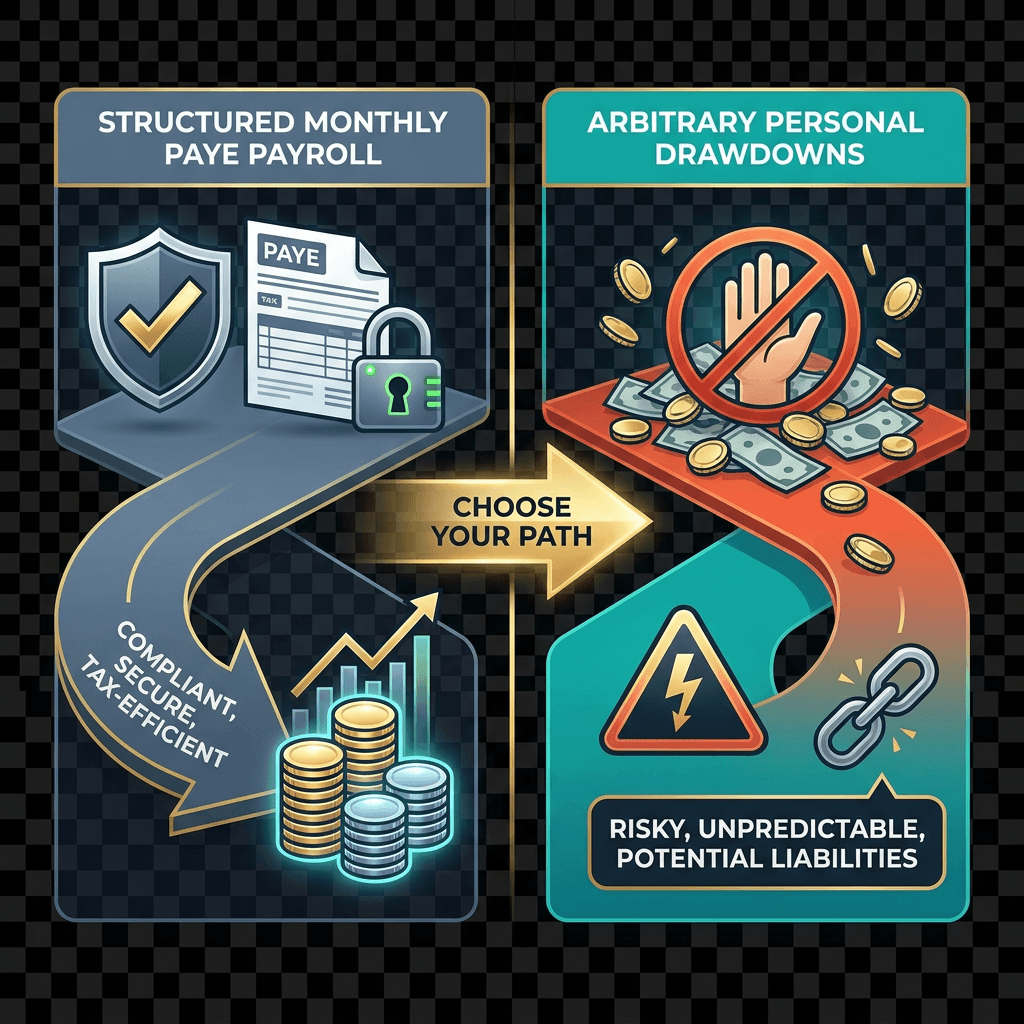
- Review your payroll structure or personal drawdowns to align with the new ₦800,000 0% tax band.
- Maximize your statutory pension and life insurance contributions to actively reduce your assessable income.
Disclaimer
Tax compliance is highly individualized. While these strategies are based explicitly on the Nigeria Tax Act 2025 provisions, always consult a certified tax professional or accountant to evaluate your specific financial profile before making major restructuring decisions.