
PAYE vs. Personal Drawdowns: How Nigerian Founders Should Structure Salaries
A guide for Nigerian startup founders on structuring personal compensation under the Tax Act 2025: PAYE salaries, rent relief, and tax-efficient drawdowns.

Tax Affairs Team
Tax Advisory
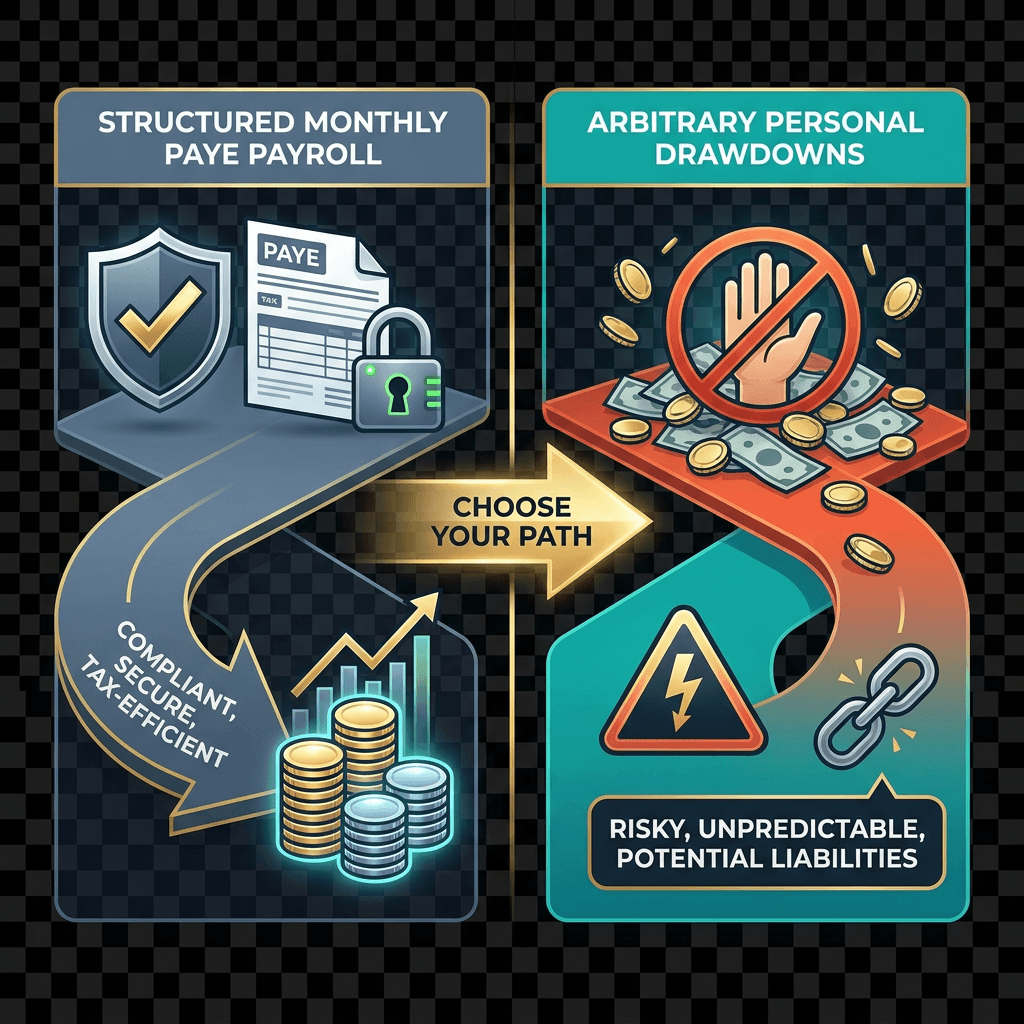
One of the most complex balancing acts for any startup founder or small business owner in Nigeria is determining exactly how to extract money from their business. Once your company begins generating revenue, a fundamental question emerges: Should you put yourself on a standard salary via Pay-As-You-Earn (PAYE), or should you take personal drawdowns and director dividends?
With the enactment of the Nigeria Tax Act (NTA) 2025, the stakes are higher than ever. The complete abolition of the old Consolidated Relief Allowance (CRA) and the introduction of a sharply progressive personal income tax scale mean that an unstructured approach to your personal finances will lead to an unnecessary tax burden.
To ensure your personal financial structure remains highly tax-efficient, legal, and audit-proof, you must master the mechanics of PAYE versus personal drawdowns under the new laws.
1. The Core Legal Distinction
To optimize your taxes, you must treat your corporate business and your personal self as two entirely separate legal entities:
- PAYE (Pay-As-You-Earn): Under this structure, your company treats you as an employee. You receive a structured monthly salary, and the company automatically calculates, deducts, and remits your personal income tax to your State’s Internal Revenue Service (SIRS) on a monthly basis.
- Personal Drawdowns / Director's Withdrawals: This is when a founder treats the business bank account like a personal wallet, pulling out lump sums arbitrarily to cover personal expenses.
🚫 The Audit Danger: In an audit, random personal drawdowns are highly scrutinized. If they are not classified as a salary, tax authorities will often aggressively reclassify them either as undocumented director loans (which attract penalties) or as de-facto dividends, subjecting the cash to withholding tax without the benefit of employment tax reliefs.
2. Leveraging the New Progressive Tax Bands
The 2025 Act introduces a progressive Personal Income Tax (PIT) bracket system that offers an incredible baseline relief: an absolute 0% tax band on your first ₦800,000 earned annually.
If you structure your personal income via a formal PAYE salary, you can precisely tune your pay to maximize this relief. Let's look at how the progressive bands escalate:
- First ₦800,000: 0% (Completely Tax-Free)
- Next ₦2,200,000: 15%
- Next ₦9,000,000: 18%
- Next ₦13,000,000: 21%
The Strategic Formula for Early-Stage Founders
If your startup is in its early growth phase and capital is tight, the most tax-efficient move is to pay yourself a modest, structured salary that takes advantage of the lower tax bands.
By avoiding large, irregular personal drawdowns, you keep your personal income from accidentally leaping into the higher 21% to 25% tax brackets, keeping more cash consolidated within your business—where it can grow tax-free under the 0% small company corporate tax exemption (for businesses with under ₦100 million in turnover).
3. The PAYE Advantage: Layering Statutory Deductions
The definitive reason why a formal salary structure beats arbitrary drawdowns is the ability to layer statutory deductions. The 2025 Tax Act allows specific personal allocations to be subtracted from your gross salary before your income tax is calculated.
If you pull money out of your business via random drawdowns, you completely lose the legal right to claim these deductions against your personal tax assessment.
Deductions You Can Use to Reduce Your Tax Base:
- The Contributory Pension Scheme (CPS): Your regular employee contribution to a registered Pension Fund Administrator (PFA) is 100% tax-exempt.
- The New Statutory Rent Relief: If you have a formal salary profile and file your taxes cleanly, you can claim a tax deduction equal to 20% of your annual rent paid (capped at a maximum of ₦500,000 per year), provided you supply your landlord's Tax Identification Number (TIN).
- Life Insurance Policies: Premiums paid on life insurance for you or your spouse are fully deductible.
By running a formal payroll system, your business can deduct your pension, your insurance, and apply your rent relief, significantly lowering your overall assessable income and keeping your personal tax bill remarkably low.
4. How to Structure Your Compensation Legally
To achieve maximum tax efficiency without triggering compliance red flags during state audits, implement a hybrid compensation model:
Step 1: Set a Base PAYE Salary
Establish a baseline, consistent monthly salary that covers your essential cost of living. Ensure this salary is processed through updated payroll software that calculates deductions according to the new progressive tax scales. This keeps your personal tax footprint clean and highly predictable.
Step 2: Use Director Dividends for Surpluses
If the business has an exceptionally profitable quarter or year, do not simply clear out the account via a personal withdrawal. Instead, declare formal Director Dividends from the company's retained earnings. Dividends are subject to a flat, predictable withholding tax rate, allowing you to extract larger pools of profit legally without inflating your progressive personal income tax bands up to the maximum 25% rate.
Step 3: Keep Impeccable Board Resolutions
Every dividend distribution or change in founder salary must be backed by a clear, dated board resolution or director's minute. Under the new tax laws, subjective deductions are dead. NRS and State Internal Revenue Services require clear, objective documentation for every single fund movement leaving your corporate accounts.
Final Verdict
Treating your startup's cash as your personal pocketbook is a guaranteed path to a catastrophic tax audit. By stepping into a structured PAYE salary model, you unlock the power of the new ₦800,000 tax-free baseline, seamlessly capture up to ₦500,000 in annual rent reliefs, and maintain the clean financial history required to scale your business safely under Nigeria's modernized tax system.
Disclaimer
Tax compliance is highly individualized. While these strategies are based explicitly on the Nigeria Tax Act 2025 provisions, always consult a certified tax professional or accountant to evaluate your specific financial profile before making major restructuring decisions.